A paradox is unfolding in Ho Chi Minh City's office leasing market. While the average rental rate across the market has remained relatively stable, rents for Grade A office buildings in the central business district continue to rise, with occupancy rates staying consistently high. Who is driving these prices upward, and why are businesses willing to pay a premium despite a cautious market?
The answer lies in a trend that is reshaping how companies—particularly multinational corporations and foreign direct investment (FDI) enterprises—choose their office space: flight-to-quality.
1. What Is Flight-to-Quality?
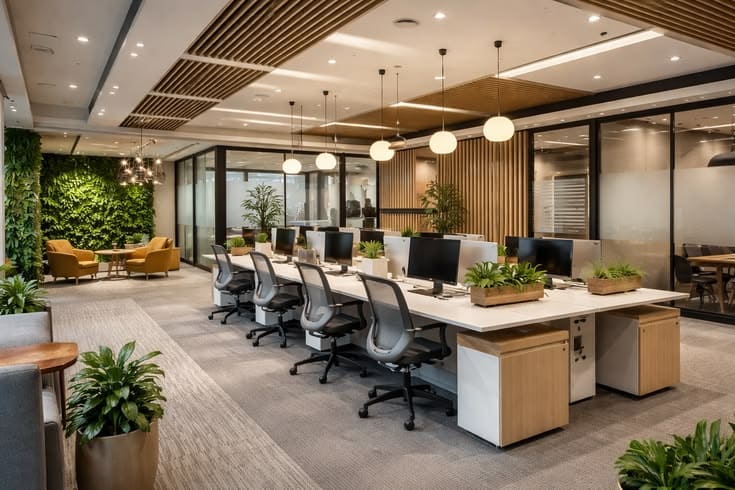
Flight-to-quality refers to the growing trend of companies relocating from older, less efficient office buildings to higher-quality properties, even if it means paying significantly higher rents.
This is far from a Vietnam-specific phenomenon. According to Savills' global research network, demand for premium office space worldwide continues to be driven by this trend, particularly for buildings with modern designs and strong sustainability credentials.
In Vietnam, Will Tran, Head of Office Leasing and Industrial Services at JLL Vietnam, noted that Ho Chi Minh City's office market is moving beyond a cyclical recovery into a longer-term restructuring phase. During this transition, flight-to-quality has become a key factor in leasing decisions, especially for multinational corporations that increasingly prioritize buildings with advanced technology infrastructure, flexible workplace design, and internationally recognized sustainability standards.
2. Market Evidence: Quality Is Being Repriced
This trend is clearly reflected in market data.
One of the most notable developments has been the launch of Saigon Marina IFC, located beside Ba Son Bridge along the Saigon River. The project contributes approximately 87,000 square meters of Grade A office space out of its total 106,000 square meters, bringing the area's total Grade A office supply to over 700,000 square meters. Despite premium rental rates, the project quickly absorbed significant demand for high-end office space.
According to JLL Vietnam, by the fourth quarter of 2025, Ho Chi Minh City had approximately 663,000 square meters of Grade A office supply across 19 office buildings. Although no new Grade A projects entered the market during the quarter, vacancy rates continued to decline both inside and outside the CBD, indicating that tenants are increasingly prioritizing quality over quantity.
This shift is closely linked to the development of Ho Chi Minh City's International Financial Centre (IFC). According to Truong Minh Huy Vu, Chairman of the Executive Agency for the Ho Chi Minh City International Financial Centre, office buildings within the IFC ecosystem must do more than provide workspace—they need digital infrastructure, sustainable building standards, and transparent operational capabilities to integrate into the global financial system.
For multinational financial institutions and technology companies considering Vietnam as a regional base, office quality has become part of a city's competitive advantage rather than simply a workplace requirement.
This premium is also reflected in pricing. In 2025, the average asking rent for Grade A offices reached USD 31.85 per square meter per month, compared with USD 20.85 for Grade B properties, demonstrating that the market is placing a significant value on quality.
3. Why Are FDI Companies Willing to Pay More?
.jpg)
Cre : Maison Office
Although relocating to a Grade A green office appears to increase rental expenses, for many FDI companies it represents a long-term strategic investment rather than an additional cost.
3.1 Meeting Global ESG Requirements
For multinational corporations, leasing a green-certified office is no longer simply an environmental initiative. It is a practical commitment to reducing corporate carbon footprints while meeting increasingly stringent sustainability reporting requirements imposed by investors and overseas headquarters.
Among green certifications, LEED has become a global benchmark, particularly for companies backed by investors or parent organizations from the United States and Europe, where ESG compliance has become an essential requirement for investment and business partnerships.
3.2 Lower Long-Term Operating Costs
This is perhaps the clearest financial rationale.
Office buildings certified under standards such as LEED or Green Mark can reduce electricity and water consumption by 15% to 30% compared with conventional buildings. Some studies report energy savings of 20% to 30%, thanks to optimized natural lighting, ventilation, and high-efficiency HVAC systems.
For companies leasing large office spaces under long-term agreements—typically three to five years or longer—these operational savings can offset, or even exceed, the initial rental premium. As a result, many FDI companies now evaluate office leasing decisions based on Total Cost of Ownership (TCO) throughout the lease term rather than comparing rental rates per square meter alone.
3.3 Attracting and Retaining Talent
Green office buildings offer healthier indoor air quality and greater access to natural daylight, helping reduce workplace stress while improving employee well-being.
This has become increasingly important as younger professionals place greater emphasis on workplace wellness and corporate sustainability. In highly competitive industries such as technology and finance, premium office environments have become valuable tools for recruiting and retaining top talent.
3.4 Strengthening Corporate Brand and Asset Value
An internationally certified office also communicates a company's financial strength, credibility, and commitment to sustainability.
Buildings with LEED certification generally attract stronger tenant demand, command higher asset values, and enjoy better access to financing. These advantages enhance confidence among investors, partners, and clients—particularly in industries where transparency and environmental responsibility are essential.
According to Savills Vietnam, green certification is no longer a temporary market trend. Instead, it has become the new benchmark for attracting premium tenants who increasingly seek sustainable workplaces capable of reducing long-term operating costs.
4. How Much Is the Green Premium?
Cre : VietnamFinance
For businesses evaluating relocation, the key question is whether higher rents are financially justified.
Current market data shows that Grade A green-certified office buildings in Ho Chi Minh City can achieve rental premiums of up to 10% compared with comparable buildings without green certification, reflecting their superior operational efficiency and ESG performance.
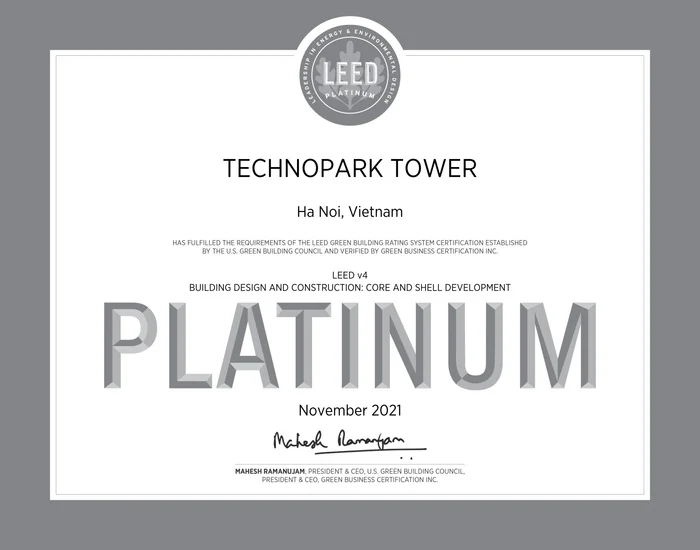
A notable example is TechnoPark Tower, currently the only office building in northern Vietnam and the second nationwide to receive LEED Platinum, the highest level of LEED certification. This demonstrates that developers across Vietnam are increasingly investing in premium-quality sustainable office space.
Competition is expected to intensify further. More than 100,000 square meters of new green-certified office space is scheduled to enter Ho Chi Minh City's CBD during 2026, increasing pressure on older office buildings to upgrade in order to retain tenants.
5. Recommendations for FDI Companies Considering Green Offices
When evaluating office space, companies should avoid comparing rental rates alone.
Instead, consider the full occupancy cost, including service charges—typically USD 6–8 per square meter per month—and fit-out costs. For shell-and-core offices, interior fit-out expenses generally range between USD 150 and USD 300 per square meter, depending on design specifications.
Interestingly, Vietnam remains one of the region's more cost-effective markets for office fit-outs, with average interior construction costs of approximately USD 657 per square meter in Ho Chi Minh City and USD 678 per square meter in Hanoi, both lower than many Asia-Pacific markets.
Businesses should also evaluate total occupancy costs over a three- to five-year period, where operational savings from green buildings become much more apparent.
For organizations with limited initial budgets, EDGE certification can serve as a practical entry point toward sustainable office occupancy before pursuing higher-level certifications such as LEED.
Finally, priority should be given to office buildings with strong connectivity to public transportation—particularly existing and future metro lines—as accessibility is becoming an increasingly important factor influencing both tenant demand and long-term asset value.
6. Conclusion
Flight-to-quality is no longer a temporary market trend. It reflects a strategic calculation increasingly made by FDI companies: accepting higher rental costs today in exchange for greater operational efficiency, ESG compliance, stronger talent retention, and enhanced corporate reputation tomorrow.
With Vietnam's supply of green-certified office buildings still relatively limited compared with growing demand, this trend is expected to continue shaping the office market in the years ahead. Companies that upgrade their workplace strategies early are likely to gain a significant competitive advantage.
If your business is considering relocating to a Grade A green-certified office, our advisory team is ready to help you evaluate the total cost-benefit equation and identify office solutions that align with your budget and ESG objectives.
Market data compiled from reports and insights by Savills Vietnam, JLL Vietnam, Cushman & Wakefield Vietnam, and leading Vietnamese real estate sources, updated through Q2 2026.